

EPC AND FLEXIBLE OWNERSHIP
Ways We Work With You
One tank range. We flex on how we deliver it, and on how you fund it.
You might be building permanent infrastructure, covering a planned shutdown, or bridging a gap that could run for years. The containment performance we deliver does not change. What changes is how we deliver it, and how you fund it.
We are built to flex on both. Choose the delivery model that matches the risk you want to hold. Then choose the commercial model that matches the capital you want to commit. The engineering stays constant across every model.
That is deliberate. We would rather shape the contract to your situation than the other way round.
How We Deliver
We work across the full range of Australian delivery models. Our involvement scales from straight supply to a fully coordinated delivery package. Scope and responsibilities are agreed project by project.
How We Structure Ownership
Most storage requirements sit somewhere between permanent and temporary. We structure the commercial arrangement so the funding decision never forces the engineering decision.
Capital Purchase
You own the asset from handover, funded as capital expenditure. Relocatable tanks can be moved and redeployed across your sites for their full-service life. Available across the range.
Rent
We own the asset and take it back when your requirement ends. Available on the Concept AST™, and on the Concept Tank™ as a long-term rental.
Rent with a buy-out option
Commit operationally before you commit capital. We hold the asset on our books until you decide to take it. An agreed portion of the rent is then credited against the purchase price. Available on the Concept AST™ and Concept Tank™.
Which tank suits your project
Provide the required volume, fluid type, site conditions and target operational date to receive a tailored recommendation.
|
Concept AST™
|
Concept Tank™
|
Concept Utility Tank™
|
|
| Capacity per tank | 0.6 to 14.5 ML | 1 to 78 ML | 12 to 70 ML |
| Structural design life | Up to 5 years, subject to condition | 25-years+ | Up to 100 years |
| Build Time | 1 to 6 days | 1 to 7 weeks | 3 to 4 months |
| Relocatable | Yes | Yes | No |
| Reconfigurable Diameter | No, fixed diameter | Yes, using existing panels | No |
| Best for | Emergency response, short campaigns | Larger volumes on expedited programs | Permanent storage on constrained sites |
Fluids we contain
Every system in the range stores fluids up to specific gravity (SG) 1.2 as standard, with higher SG available on request. Liner specifications are matched to fluid chemistry and asset service life.
- Leachate
- Produced water
- Brine
- Mine-affected water
- Industrial process fluids
- Data centre cooling and fire water
- PFAS-affected water
- Potable water
- Raw water
- Stormwater
- Dust suppression water
Proven in the field
Most customers land on a structure that was not their starting assumption. The right model depends on the duration, the site and how the capital is approved.
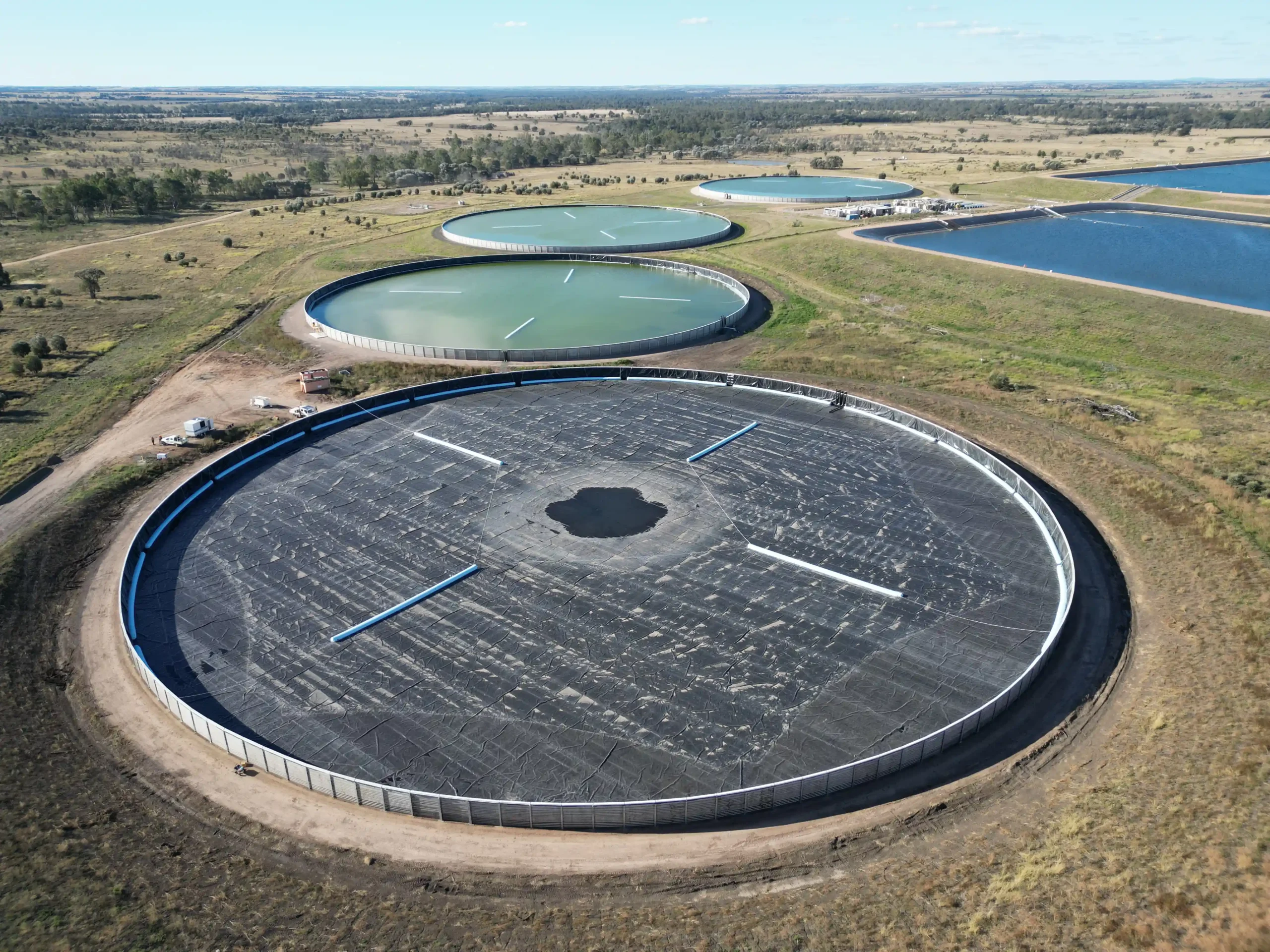
Scalable Brine Evaporation
An oil & gas customer experienced rapid operational growth and increasing volumes of environmentally sensitive brine, necessitating secure storage and evaporation. Unclear total storage requirements resulted in planning uncertainty. An existing dam provided...
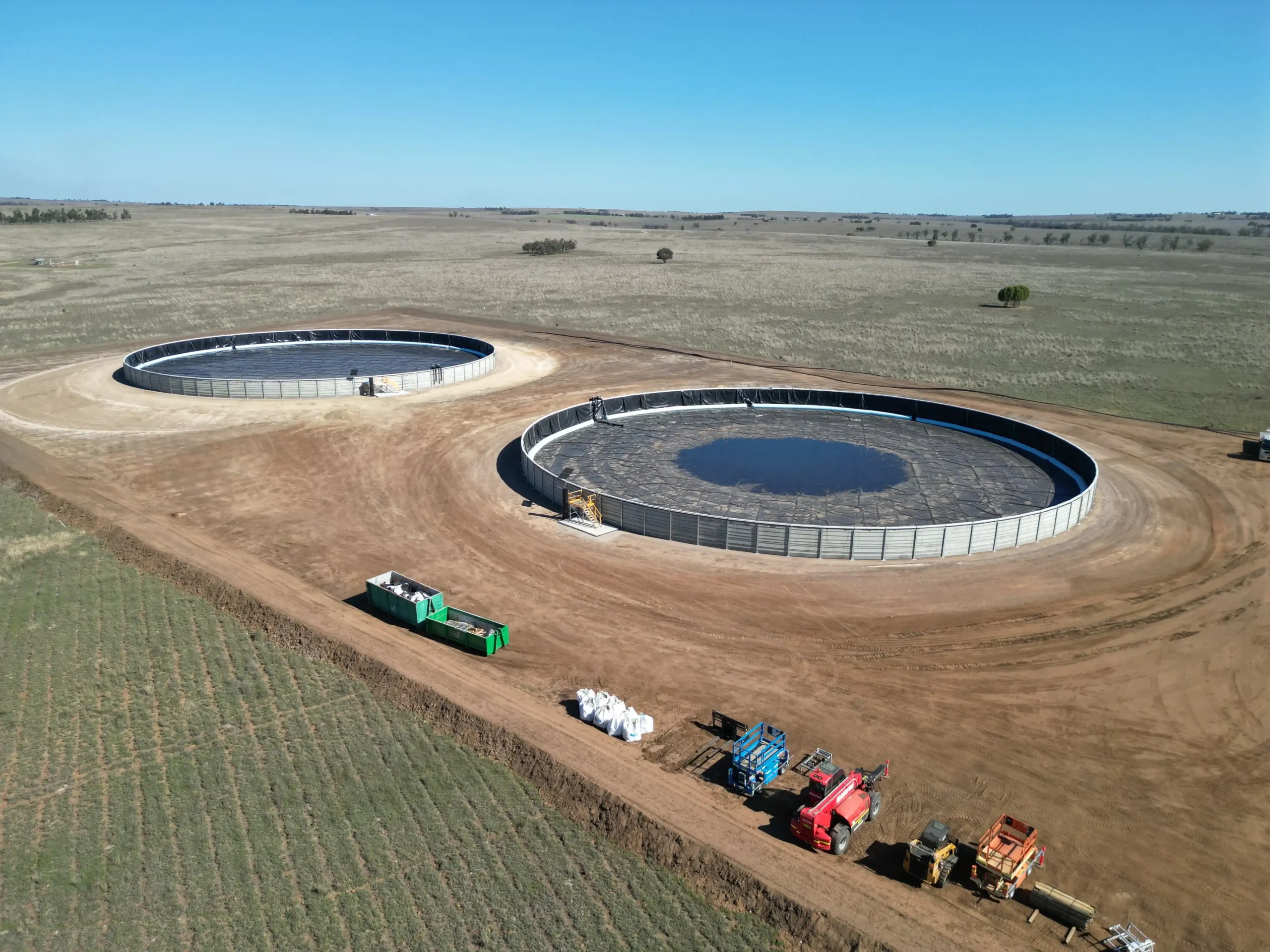
Dynamic Brine Services
Our customer in the Oil & Gas industry required secure on-site water storage system for contaminated flowback water to avoid the chance of discharge of contaminated water, which was essential in managing costs in relation to their gas production and frack pilot...
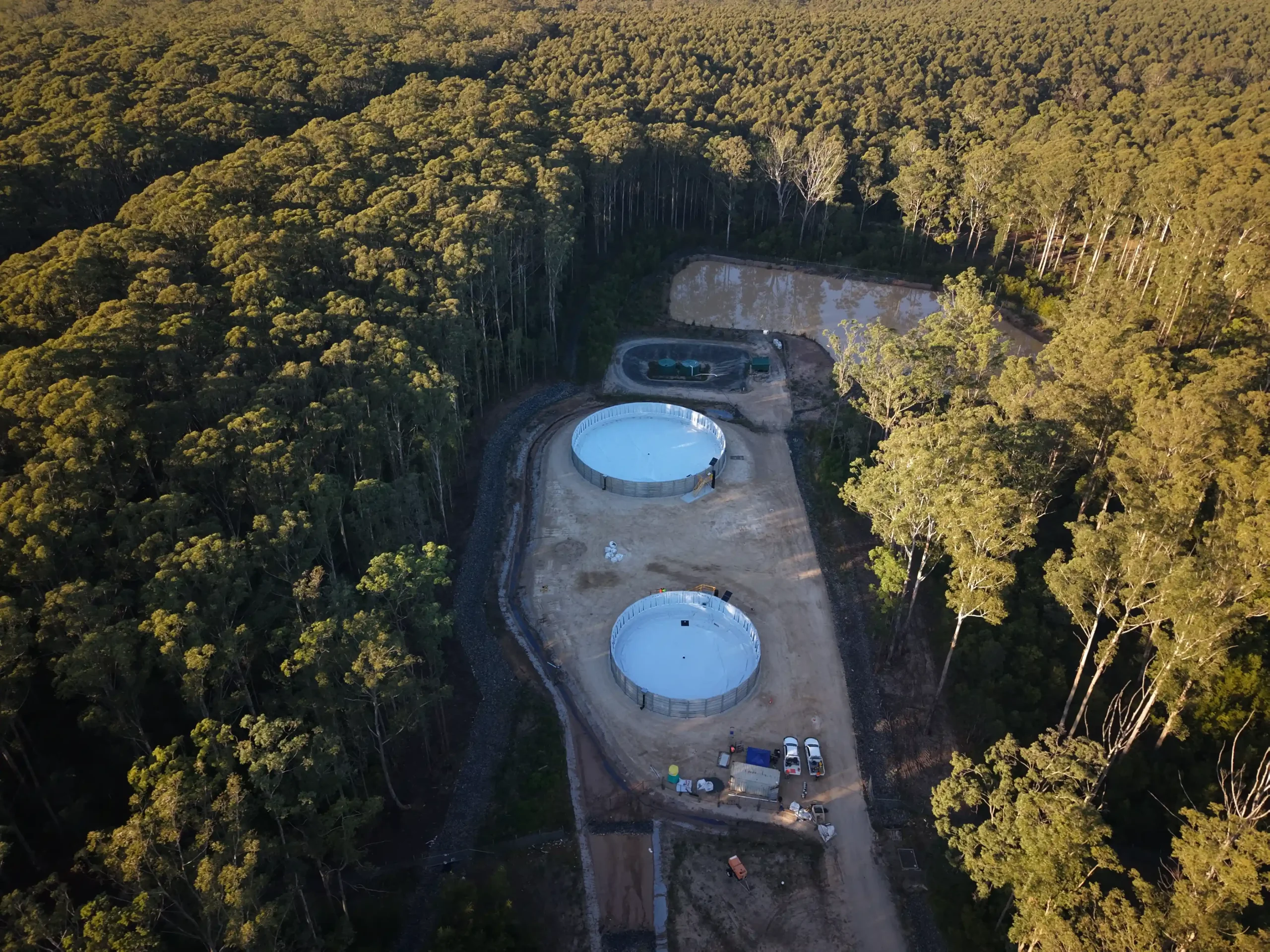
Future-Proofing Landfill Fluid Storage
This Council incurred substantial ongoing costs to transport leachate offsite for disposal, draining the operational budget with no long-term infrastructure value. Compounding this, the site faced active environmental compliance risks, with the state EPA mandating...
Frequently asked
questions
What is a design and construct contract?
Under a design and construct (D&C) contract, one contractor delivers design and construction against the client's performance requirements. On our projects, design scope is agreed case by case. We carry defined design elements and engage qualified partners for the balance.
Can rental payments count toward buying the tank?
Yes, if you rent with a buy-out option. An agreed portion of the rent is credited against the purchase price when you exercise the option. The buy-out option is available on Concept AST™ rentals and on Concept Tank™ long-term rentals.
Who carries design responsibility?
It is set in each contract, before anyone mobilises. We self-perform the design elements within our in-house engineering capability and engage qualified partners for the balance.
Scope. Structure. Deliver.
Tell us the duration, the fluid and the site. We'll recommend a delivery and commercial model that works commercially and technically.