

FROM EARLY CONTRACTOR INVOLVEMENT TO END OF LIFE
Engineering and Asset Services
Most of the cost, compliance and operability of a water storage asset is locked in before anything is built. Most of its value is then realised or lost over the decades that follow. Through early contractor involvement, engineering studies and asset lifecycle management, we support owner's teams from first study to retirement. The result is storage sized to the operation's needs, and an asset that earns its place over its full life.
Our modular infrastructure is not a one-way decision. It can be scaled up or down as demand changes, relocated as operations move, and rebuilt on a new site. That optionality should be designed in deliberately, and valued when the investment case is written.
Early Contractor Involvement (ECI)
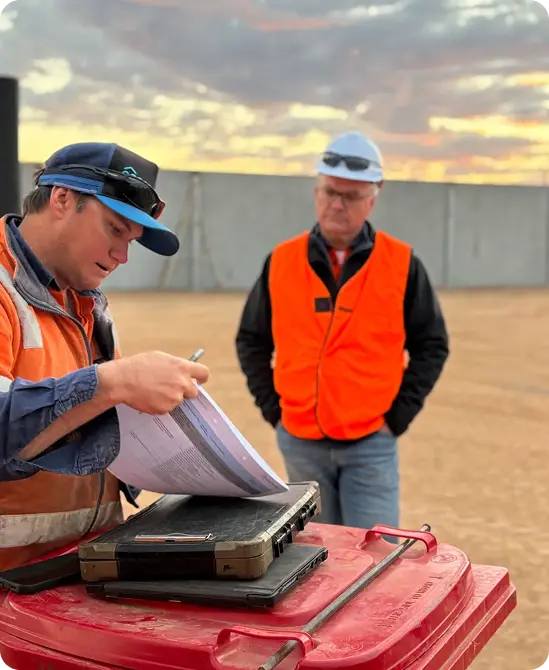
We join the project team before the design is fixed. With your engineers, we test siting, capacity, staging, containment, access and constructability. Each option is priced and programmed openly while it can still be changed. We also start with the end in mind. Every storage decision made at concept stage sets the rehabilitation and closure obligation that follows. We therefore design for removal, reuse and site handback from the first workshop. It is not left to a closure plan written a decade later.
Our modular tanks can be extended, reduced, relocated and rebuilt. ECI is where that flexibility is designed in, rather than discovered later. We plan the staging, expansion points, foundation and connection interfaces, and relocation path up front. Future capacity then becomes a modular addition within the original design.
Benefits:
- Constructability, cost and delivery input while changes are still low-cost
- Fewer late design changes, variations and rework
- Realistic cost and program certainty before the investment decision
- Operability and maintainability designed in, not retrofitted
- Future expansion, reduction and relocation planned from day one
- A smaller disturbance footprint and lower rehabilitation liability on the balance sheet
Engineering Studies
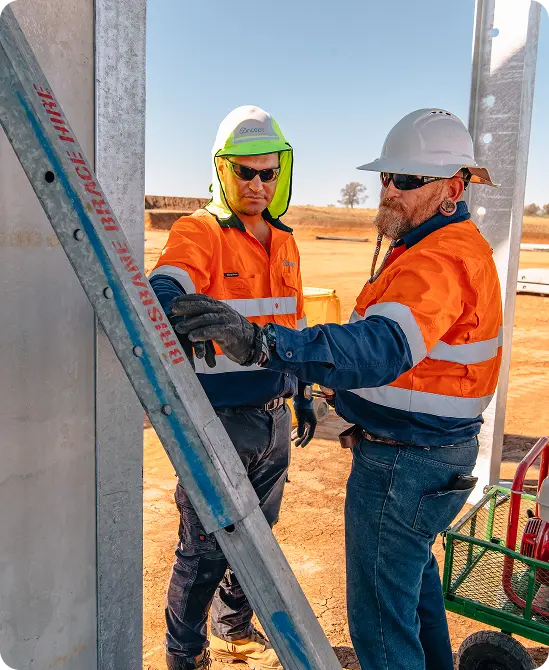
Our studies run through the concept, select and define stages, including front-end engineering. They cover storage strategy, water balance, sizing and staging. They also cover options assessment, the foundation and geotechnical interface, and the regulatory compliance pathway. Each study includes class estimates and a whole-of-life cost comparison across containment options. Our studies cost the full life, including the exit. Decommissioning, removal, residual value and site rehabilitation are modelled alongside capital and operating cost. The option that looks cheapest to build is then tested against what it will cost to close.
Our studies also value flexibility. Where demand is uncertain, we model staged capacity against a single large build. Relocation and reuse are carried into the whole-of-life case. Capital is then committed as demand is confirmed.
Benefits:
- A defined, fundable scope and estimate for the board or the regulator
- Options compared on total cost of ownership, including closure
- Staged capacity that defers capital until demand is confirmed
- Relocation and reuse value carried into the investment case
- Rehabilitation liability and financial assurance exposure quantified up front
- Risk, compliance and approvals pathway identified at study stage
- An independent technical basis for staging capital
Asset and Fleet Management
We manage storage as a single fleet across your sites. That covers asset registers, condition assessment, and inspection and maintenance regimes. It also covers rotable pools and critical spares, mobilisation between sites, redeployment and utilisation reporting.
Benefits:
- Existing capacity redeployed before new capital is committed
- Planned intervention instead of unplanned downtime
- Auditable condition and compliance evidence
- Lower total cost of ownership across the fleet
End of Life and Asset Recovery
We plan residual value assessment, refurbishment and redeployment as part of the asset strategy. Decommissioning and disposal are planned the same way, from the outset.
Benefits:
- Residual value recovered rather than written off
- Disposal and rehabilitation obligations costed and planned, not deferred
- Capacity released back into the fleet for reuse
Asset transition: from dams and ponds to above-ground storage
We move sites from legacy in-ground storage, such as ageing dams, ponds and pits, to engineered above-ground infrastructure. Operations continue throughout. We plan the staged changeover, interim capacity, and the dewatering and residuals interface. We also support decommissioning and stakeholder engagement.
Benefits:
- Operations maintained through the changeover
- Seepage, evaporation, containment and dam safety risks removed from site
- Progressive rehabilitation of the legacy footprint, supporting mine closure
- A defensible position with regulators and the community
Why Concept Tanks can deliver this
These services are delivered by our in-house engineering and delivery team. Our team includes Registered Professional Engineers of Queensland (RPEQ), chartered engineers and project management professionals. They come from original equipment manufacturers (OEMs), contracting firms, and asset owners and operators. They have designed these assets, built them and lived with them in operation. That mix of design authority, manufacturing control and ownership experience lets us advise on the whole asset life. We then stand behind the outcome.
Which tank suits your project
Provide the required volume, fluid type, site conditions and target operational date to receive a tailored recommendation.
|
Concept AST™
|
Concept Tank™
|
Concept Utility Tank™
|
|
| Capacity per tank | 0.6 to 14.5 ML | 1 to 78 ML | 12 to 70 ML |
| Structural design life | Up to 5 years, subject to condition | 25-years+ | Up to 100 years |
| Build Time | 1 to 6 days | 1 to 7 weeks | 3 to 4 months |
| Relocatable | Yes | Yes | No |
| Reconfigurable Diameter | No, fixed diameter | Yes, using existing panels | No |
| Best for | Emergency response, short campaigns | Larger volumes on expedited programs | Permanent storage on constrained sites |
Fluids we contain
Every system in the range stores fluids up to specific gravity (SG) 1.2 as standard, with higher SG available on request. Liner specifications are matched to fluid chemistry and asset service life.
- Leachate
- Produced water
- Brine
- Mine-affected water
- Industrial process fluids
- Data centre cooling and fire water
- PFAS-affected water
- Potable water
- Raw water
- Stormwater
- Dust suppression water
Proven in the field
Engineering and asset services prove their value over the life of the asset. That might be a design shaped at concept stage, capacity staged against demand, or a legacy dam retired without disruption.
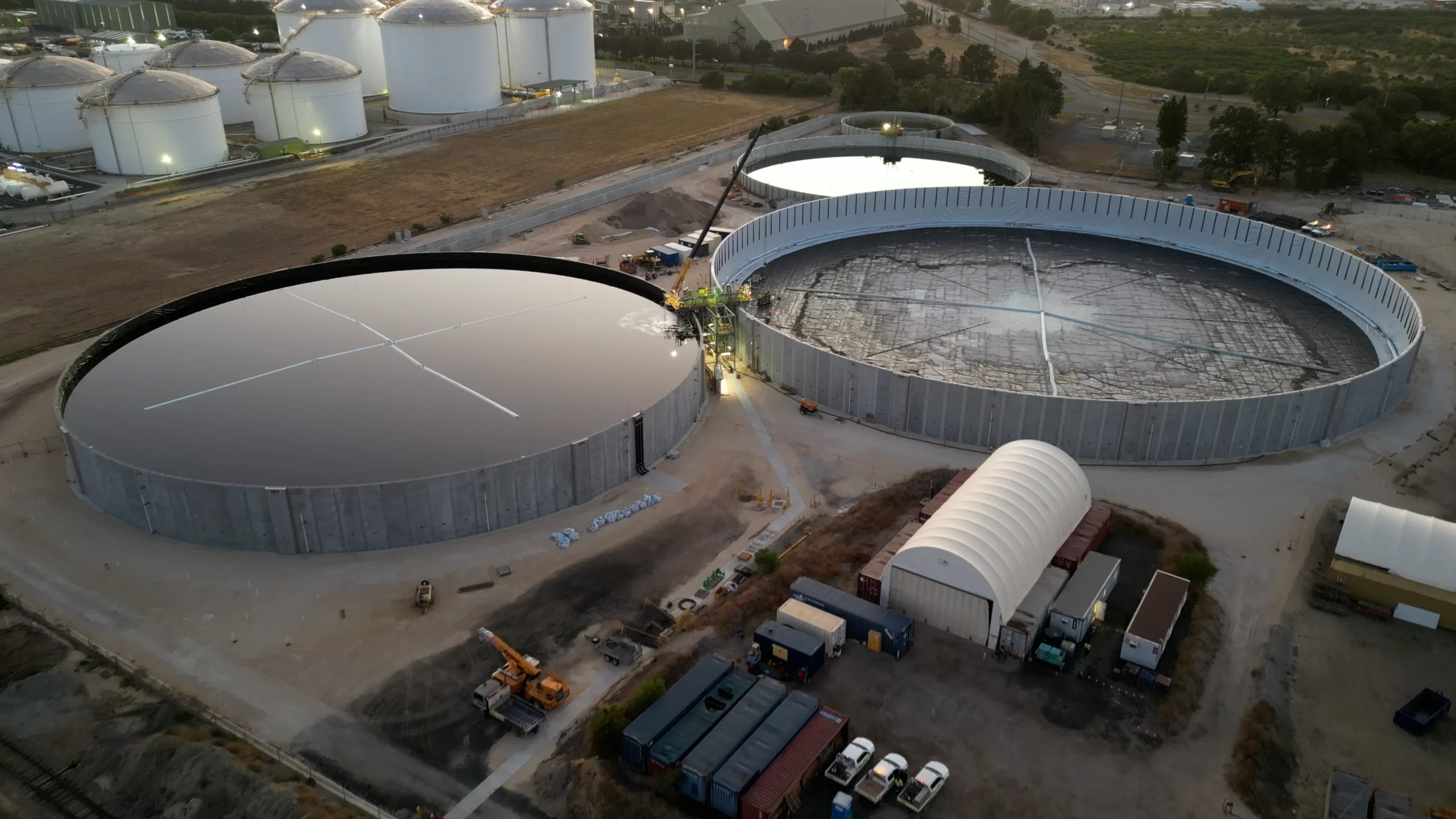
Urban High-Capacity Storage
The customer faced three significant challenges in this project. The site offered minimal working area outside the designated pad, so traditional construction equipment, such as large machines and trucks, could not be accommodated. This spatial limitation posed a...
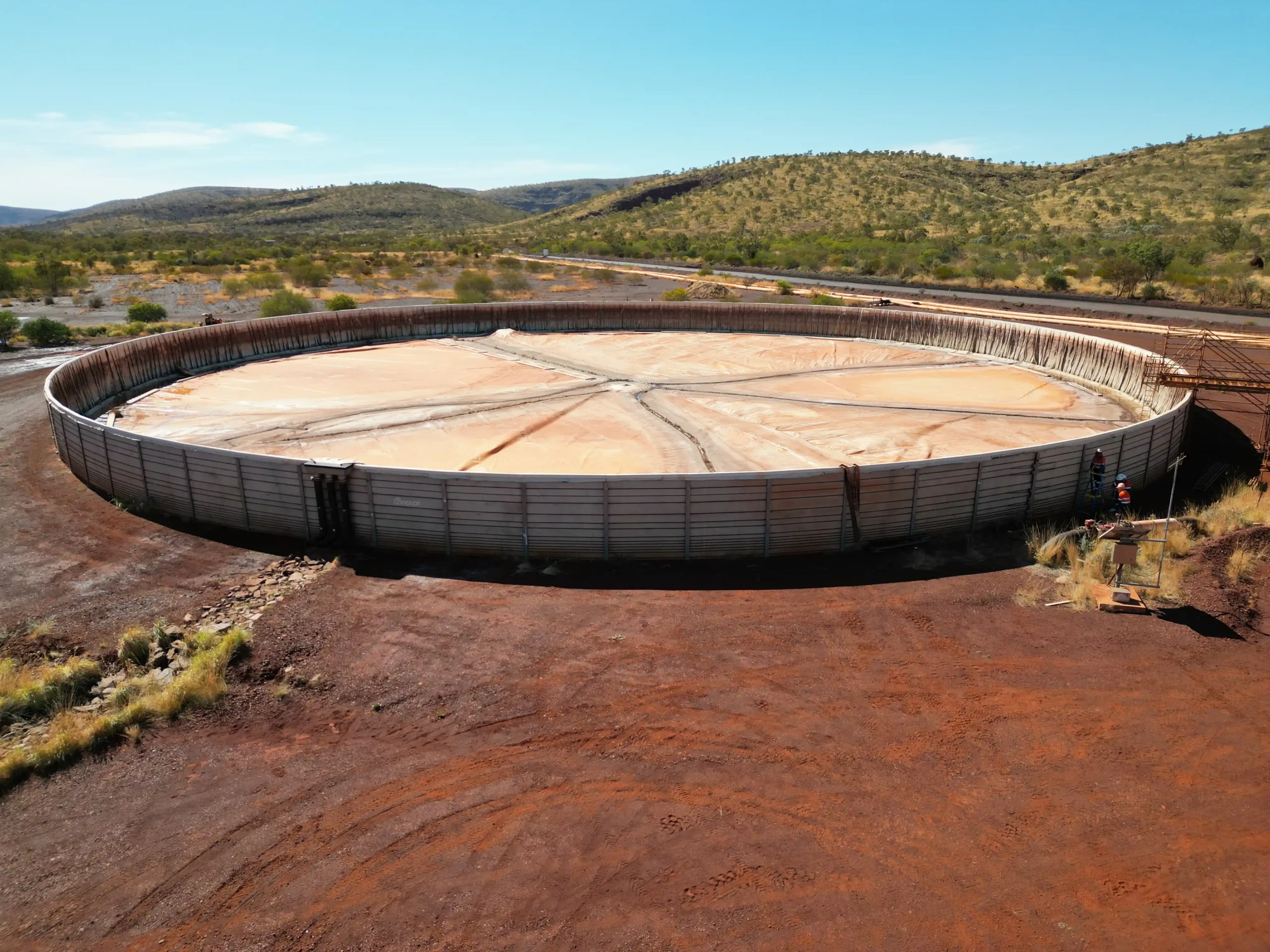
Pilbara Dust Suppression Storage
The Pilbara presented a relentless construction environment: mini-tornado whirlwinds, oppressive heat, strong winds, cyclone alerts, and high-UV exposure throughout the program. Iron ore dust, nicknamed the "Pilbara Fog", blanketed the zone continuously, intensified...
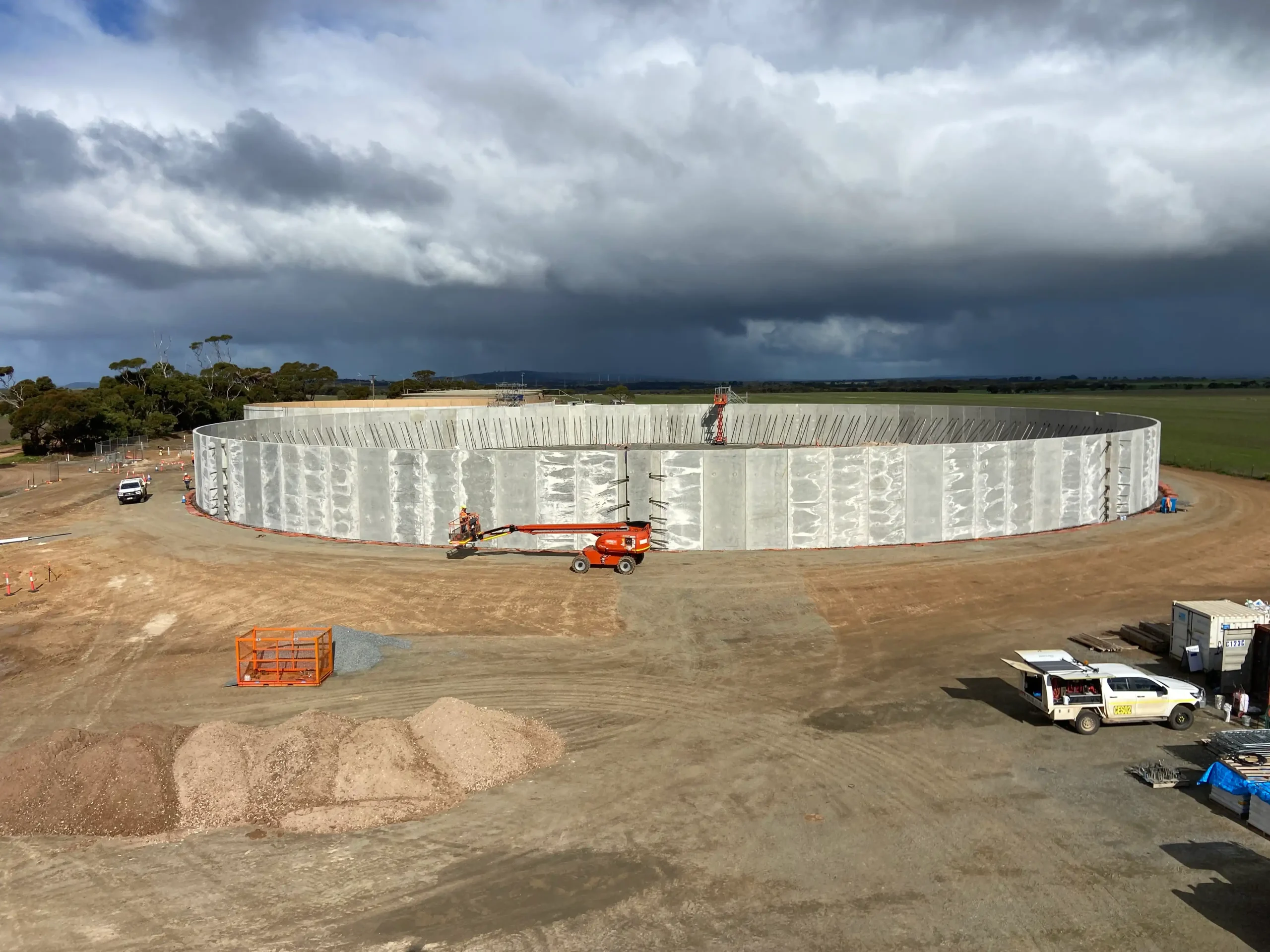
Utility-Grade Government Containment
Remote sites make everything harder, and potable water leaves no margin for error. Our customer, an Australian water utility, needed two large-scale potable water storage systems at a remote site. The usual options didn’t stack up. Traditional storage was expensive...
Frequently asked
questions
What is early contractor involvement in storage projects?
Early contractor involvement (ECI) brings the storage supplier into the project team before the design is fixed. Siting, capacity, staging, containment and constructability are tested with the owner's engineers. Options are priced while they can still change, which reduces late variations and rework.
How do you transition from an evaporation pond or dam to above-ground storage?
In stages, without interrupting operations. We plan interim capacity, the changeover sequence, dewatering and the residuals interface. We then support decommissioning of the legacy footprint so progressive rehabilitation can begin.
How is rehabilitation liability reduced?
By designing for removal from the first workshop and costing closure at study stage. Retiring ageing in-ground storage early reduces it further. Above-ground tanks leave a smaller disturbance footprint. Relocatable tanks can then move to the next site rather than remain as a liability.
Plan. Manage. Recover.
Talk to us before the design is fixed. We'll help you build storage that earns its place across its full life.