

Large-scale Fluid Storage for Australia's Oil & Gas Industry
Engineered storage solutions for brine and produced water that give operators confidence in compliance, integrity, and long-term asset reliability.
219
BRINE AND CONCENTRATE
TANK INSTALLED
15+
YEARS OF CONTAINMENT EXPERIENCE
1ML-78ML
MODULAR TANK CAPACITY RANGE
Trusted Since 2009
Concept Tanks has stored complex fluids for Australia's onshore energy sector since 2009: brine, produced water, flowback, effluent and concentrates from coal seam gas and conventional onshore operations.
Our patented above-ground storage systems use passive evaporation to reduce fluid volumes, cutting handling, transport and remediation costs while lowering environmental risk. In a sector judged on social licence and regulatory compliance, containment certainty is not optional, and every litre must be accounted for.
About 11,000 coal seam gas (CSG) wells extract around 52,000ML of water each year across Queensland’s Surat Cumulative Management Area (CMA) (Office of Groundwater Impact Assessment, Underground Water Impact Report 2025). It’s places like this where water decisions have long-term consequences for the environment, communities, and your operating licence.
What oil & gas operators are
facing

Salinity and chemical variation
CSG water policy prioritises beneficial reuse water, typically using reverse osmosis (RO) as the final treatment stage. But RO leaves concentrated brine, high in total dissolved solids (TDS) a salinity and chemical variation, and chlorides, that must be contained before disposal.
Concept Tanks specifies dual-lined containment systems, with liners selected against the site's measured fluid chemistry (TDS, pH, temperature and residual hydrocarbons), not a generic duty rating.

Corrosion and scaling
Concentrated brine attacks materials that tolerate raw produced water, through chloride corrosion and mineral scaling. Many standard tank and liner systems are not rated for this duty. Every Concept Tank™ includes an integrated Leak Detection System (LDS) that identifies a compromised liner before fluid reaches grade.

Regulatory compliance
Queensland and NSW have tightened requirements for produced water and brine storage, transport and monitoring. Concept Tanks applies full quality assurance (QA)/quality control (QC) through manufacture, installation and commissioning, and offers optional solar-powered satellite telemetry for:
- Fluid levels
- LDS alarms
- Weather
Concept Tanks also provides in-service clean-outs, relines and relocations to maintain compliance over the asset life.

Remote logistics
Surat and Bowen Basin projects penalise complex delivery and installation. Concept Tanks manufactures in-house in Australia, so remote pads do not wait on international shipping. Installation requires minimal civil works compared with an earthen dam or pond, reducing earthworks risk to the schedule.

Scalability
Gas fields move and water volumes change. A frac pilot scales to production, development extends across new well pads, and fixed storage ends up undersized or stranded. Concept Tanks has installed brine systems from 1.8 ML to 78 ML, with larger capacities available as tank farms.
Concept Tanks systems reconfigure on the existing structure, relocate as the water balance shifts, and expand with additional tanks, deferring capital until storage is needed.

Evaporation and generation control
In an uncovered system, rain falling on produced water becomes produced water, adding volume that requires treatment. Every 10 mm of rain on a 1 ha surface adds 0.1ML.
A Concept Tanks Engineered Floating Cover excludes rainfall, retains treated water through the dry season and contains methane and volatile organic compound (VOC) emissions.

Commercial flexibility
Concept Tanks offers the Concept AST™ for rent on short exploration campaigns, and for purchase or rent with buy-out options on producing fields. Configurations suit both permanent water management facilities and mobile operations.
Oil & gas fluids we store
Oil and gas projects generate a range of fluids, each with specific storage requirements.
Concept Tanks supports six core fluid types
Produced water
Produced water is formation water brought to surface during hydrocarbon extraction. Often ancient and highly mineralised, it can contain trace organics including benzene, toluene, ethylbenzene and xylenes (BTEX), coal fines and naturally occurring radioactive material (NORM).
Brine and brine concentrate
Brine is the highly saline stream generated when treating produced water, typically by reverse osmosis (RO). Denser than water and highly corrosive to conventional infrastructure, it presents serious environmental risk: uncontrolled leakage can contaminate freshwater aquifers and increase soil salinity.
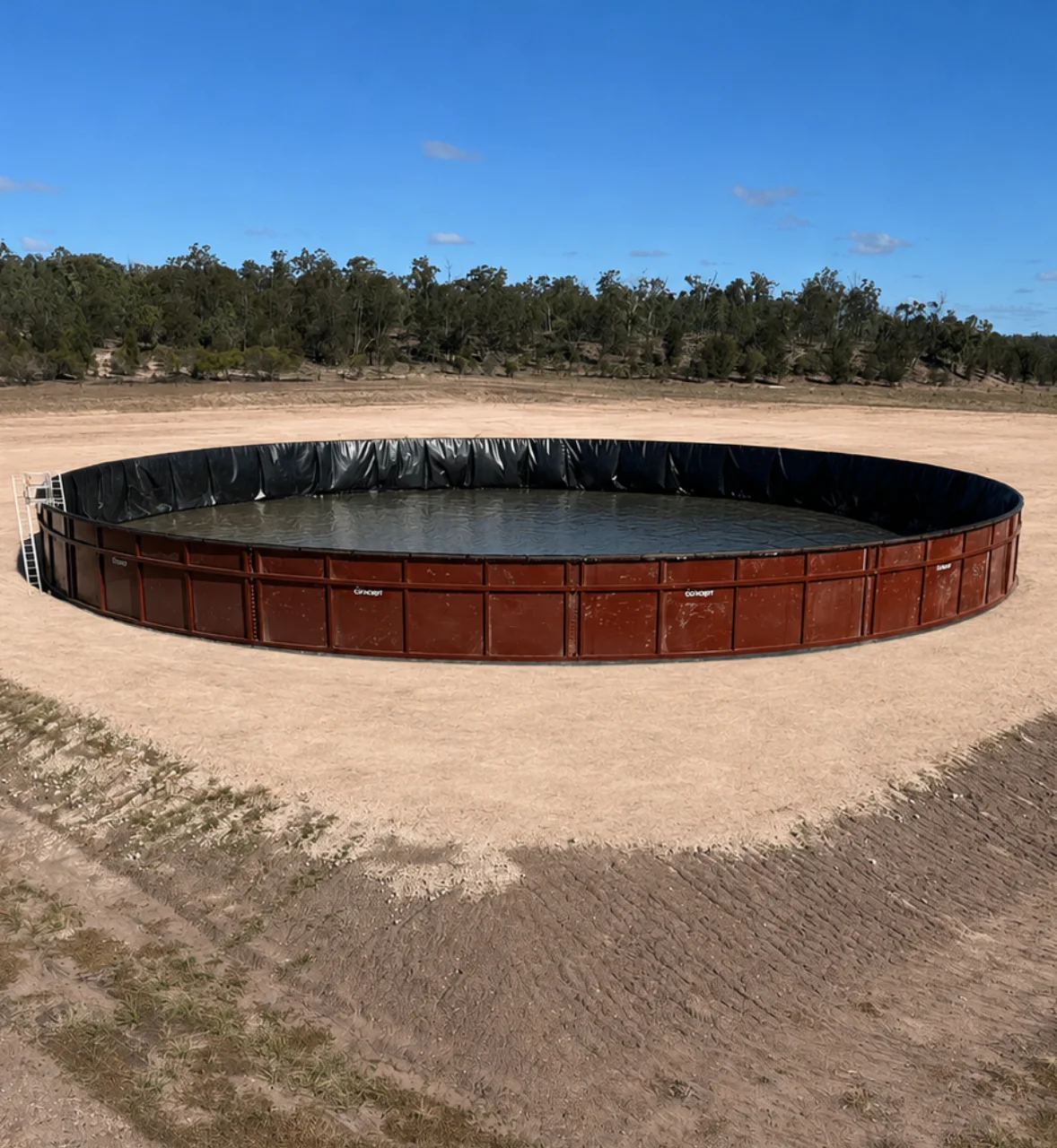
Concept Tanks has installed 188 brine systems (1.8 ML to 78 ML) and 31 brine concentrate systems (1.8 ML to 56 ML) across Australia. Each system can be configured to promote or prevent evaporation, depending on site requirements.
Flowback water
Flowback water is the contaminated fluid returned to surface during and after hydraulic fracturing. Without secure on-site storage it becomes a discharge risk and a logistics cost, typically trucked offsite for disposal. Frac pilots need storage that scales from rented temporary capacity to permanent infrastructure as the program moves to production.
Process effluent
Effluent from oil and gas processing contains chemical residues, oils, surfactants and solids, with variable pH and temperature. Secure buffer storage protects downstream treatment and supports compliance with state regulatory requirements.
Raw water
Open raw water storage is exposed to summer algal blooms, sediment at the intake and high evaporation losses in arid regions. Lined, covered Concept Tanks systems protect water quality upstream of treatment, so the plant receives raw water in the condition it was stored.
Completions water supply
Fresh water held on site ahead of fracking and well completions, removing dependence on trucked supply during the program.
Systems and add-ons at a glance
Here's a quick comparison of the system types and add-ons referenced above. Use it to match the right configuration to your fluid and site requirements:
|
Concept Tank™
Explore the Concept Tank™ ↗ |
Concept Utility Tank™
Explore the Concept Utility Tank™↗ |
Concept AST™
Explore the Concept AST↗ |
|
| Capacity | 1ML – 78ML | 12ML – 70ML | 0.6ML – 14.5ML |
| Best For | Large, regulated storage that may grow, shrink or move | Permanent, high-capacity storage on a tight footprint | Short- to medium-term, emergency and rental storage |
Add-Ons
EFC
Engineered Floating Cover
Engineered geosynthetic barrier used to prevent ingress of rain, cross contamination and prevent evaporation. We engineer and configure covers to your need to prevent excess generation and/or evaporation.
LDS
Leak Detection System
Monitors the interstitial void between primary and secondary liners, giving early warning of a potential primary-liner breach. Powered using a solar battery backup or mains power connection, our LDS services any site no matter how remote.
MONITORING
Remote Monitoring
Remote monitoring connects the system and LDS to your site supervisory control and data acquisition (SCADA) system or telemetry for remote visibility and alarm response.
PIPEWORK
Custom Pipework
Connecting the storage solution to your infrastructure pipework is configured to your needs, including under, over, or through wall penetrations, as well as flanges, valves and vortex breakers.
Proven performance
Concept Tanks has supplied fluid storage to Australia's energy sector for over 17 years. That includes nearly 200 brine systems and 30+ brine concentrate systems on CSG and onshore oil and gas sites. We manufacture in Australia and install with our own crews. That means faster mobilisation and no handover between contractors.
Scalable Brine Evaporation
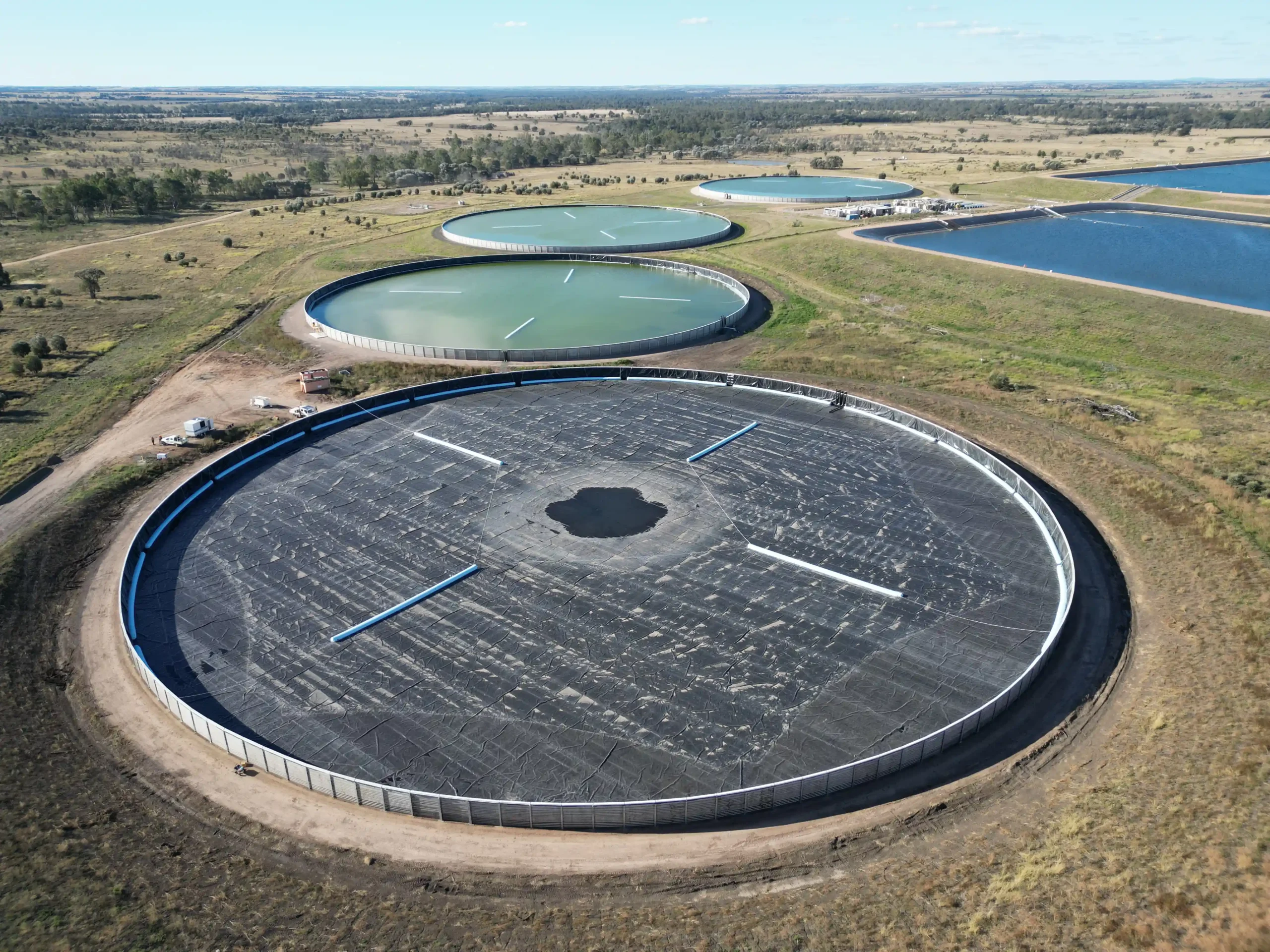
An oil & gas customer experienced rapid operational growth and increasing volumes of environmentally sensitive brine, necessitating secure storage and evaporation. Unclear total storage requirements resulted in planning uncertainty. An existing dam provided...
Rethinking Frac Fluid Storage In Australia
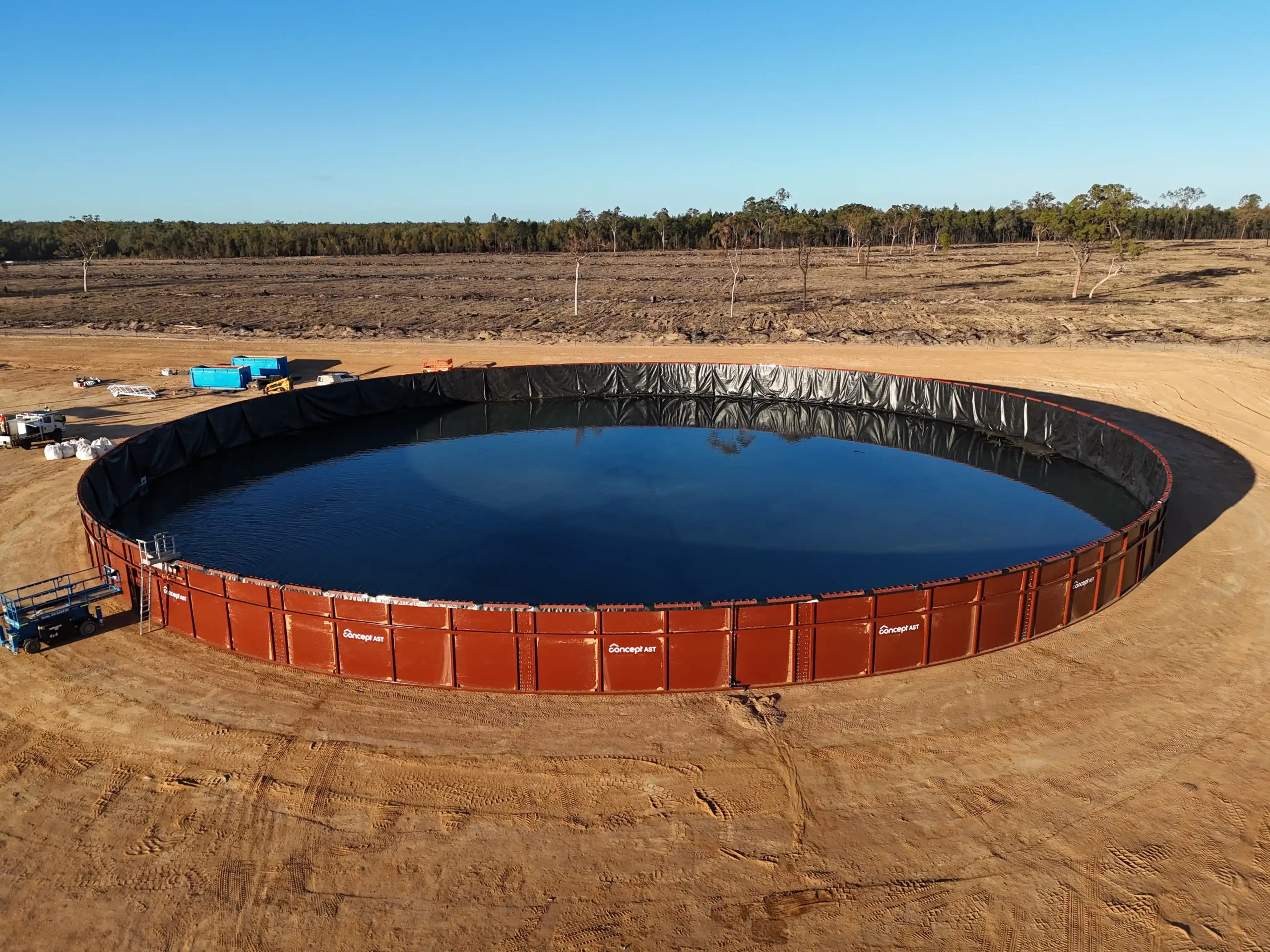
Frac water management is logistically complex. Remote sites, variable conditions, and strict project schedules mean any delay in water delivery can increase standby costs and disrupt operations. A recent project required 14.5ML of temporary storage capacity for a...
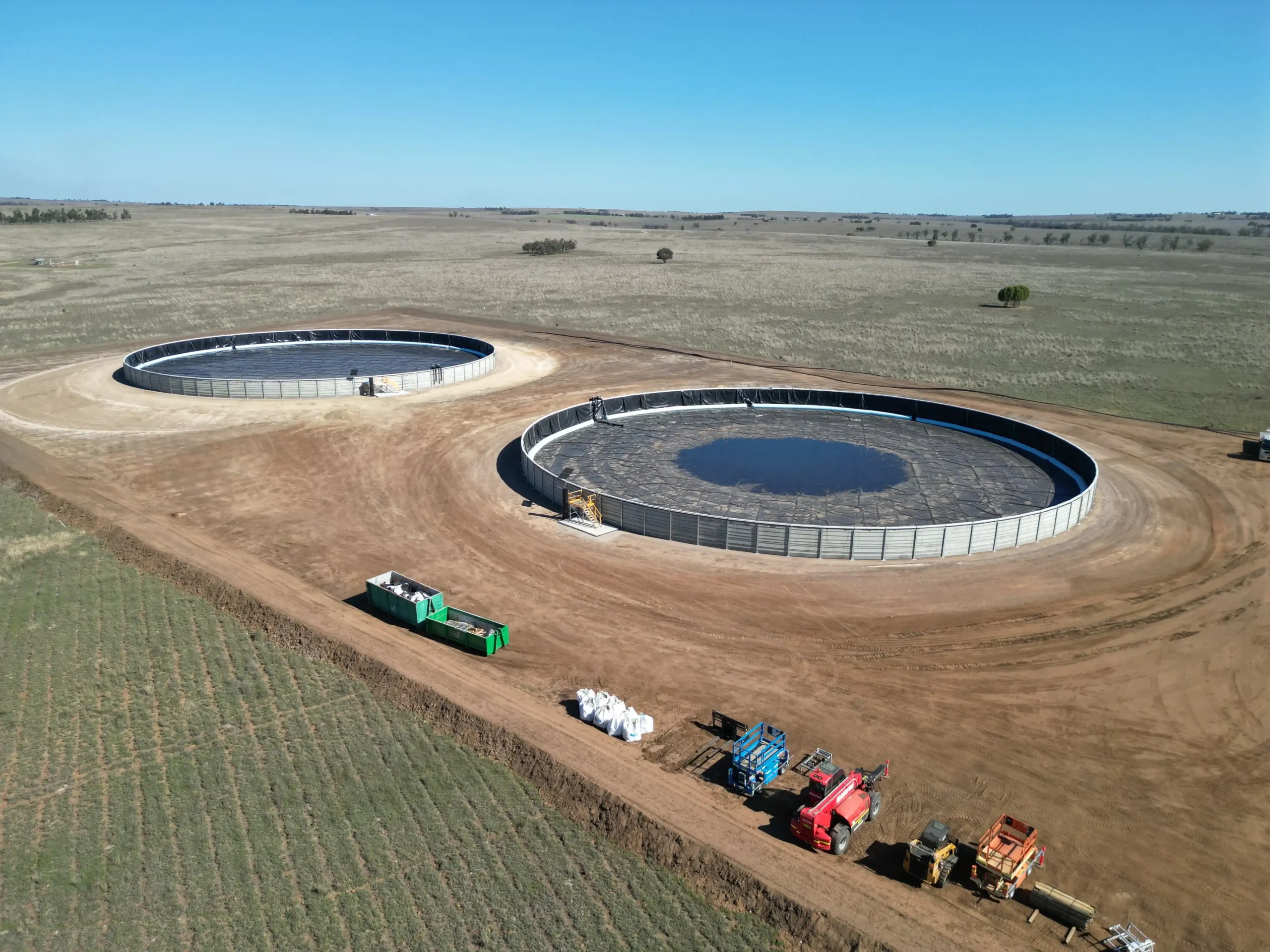
Dynamic Brine Services
Our customer in the Oil & Gas industry required secure on-site water storage system for contaminated flowback water to avoid the chance of discharge of contaminated water, which was essential in managing costs in relation to their gas production and frack pilot...
Frequently asked
questions
Common questions about the Concept Tank, Utility Tank, and Concept AST range.
Can you store brine and brine concentrate?
Yes. Concept Tanks has 188 brine systems and 31 brine concentrate systems installed across Australia, each configured to promote or prevent evaporation depending on your site requirements.
Can storage grow with a frac pilot or new well pads?
Yes. Start with Concept AST™ in a rental capacity, then move to permanent Concept Tanks as the program matures. Concept Tanks can be reconfigured using the existing structure and relocated as your water balance shifts.
How do you stop rainfall adding to produced water volumes?
An Engineered Floating Cover keeps rainfall out of the system entirely. It also holds onto treated water through a dry season and contains methane and VOC off-gassing.
Do you maintain tanks once they’re in service?
Yes. We offer clean-outs, relines and relocations once a system is in service to maintain your site’s compliance.
Can I hire or rent to buy?
The Concept AST™ is available to buy, rent or rent with buy-out option. The Concept Tank™ is available to buy, as a long-term rental, or as a long-term rental with a buy-out option. The Concept Utility Tank™ is purchase only.
Need an oil and gas water storage solution?
Every mining and critical minerals project has different storage requirements. We can help determine the appropriate system, liner and ancillary configuration for your project.