


Resources
Case Study
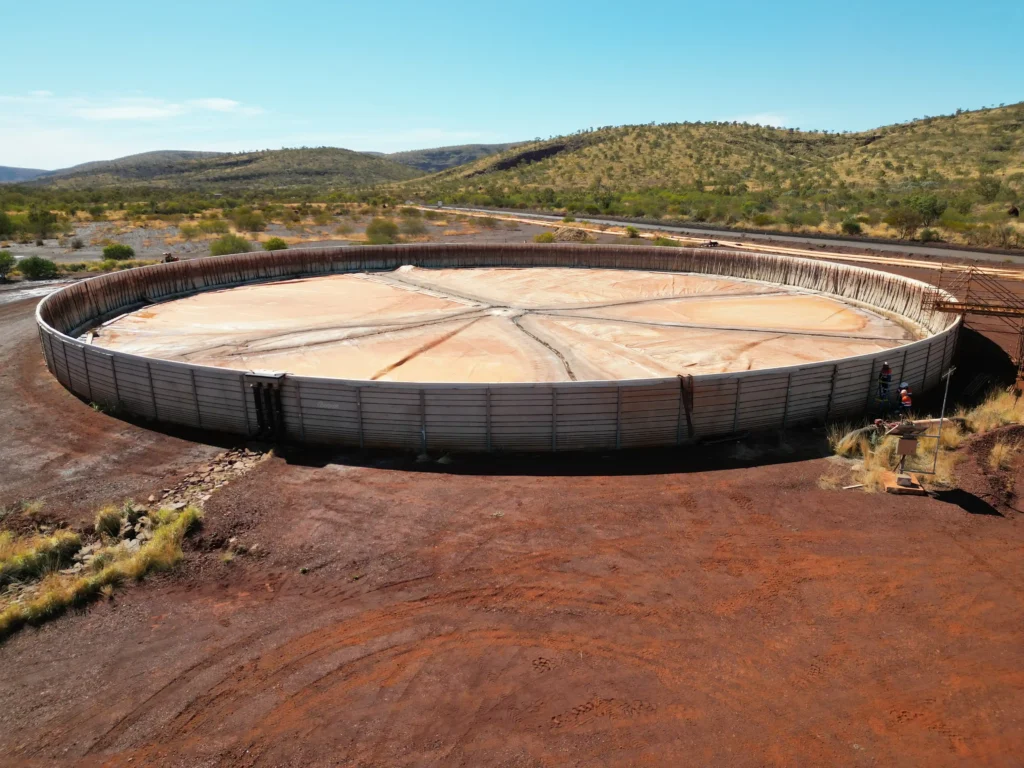
Pilbara Dust Suppression Storage
The Pilbara presented a relentless construction environment: mini-tornado whirlwinds, oppressive heat, strong winds, cyclone alerts, and high-UV exposure throughout the program. Iron ore dust, nicknamed the “Pilbara Fog”, blanketed the zone continuously, intensified by ore stockpiled on an adjacent hill. All while the site remained operational. Stringent safety protocols required multiple inductions and competency verifications […]…
See more
Nov 10, 2026
Case Study
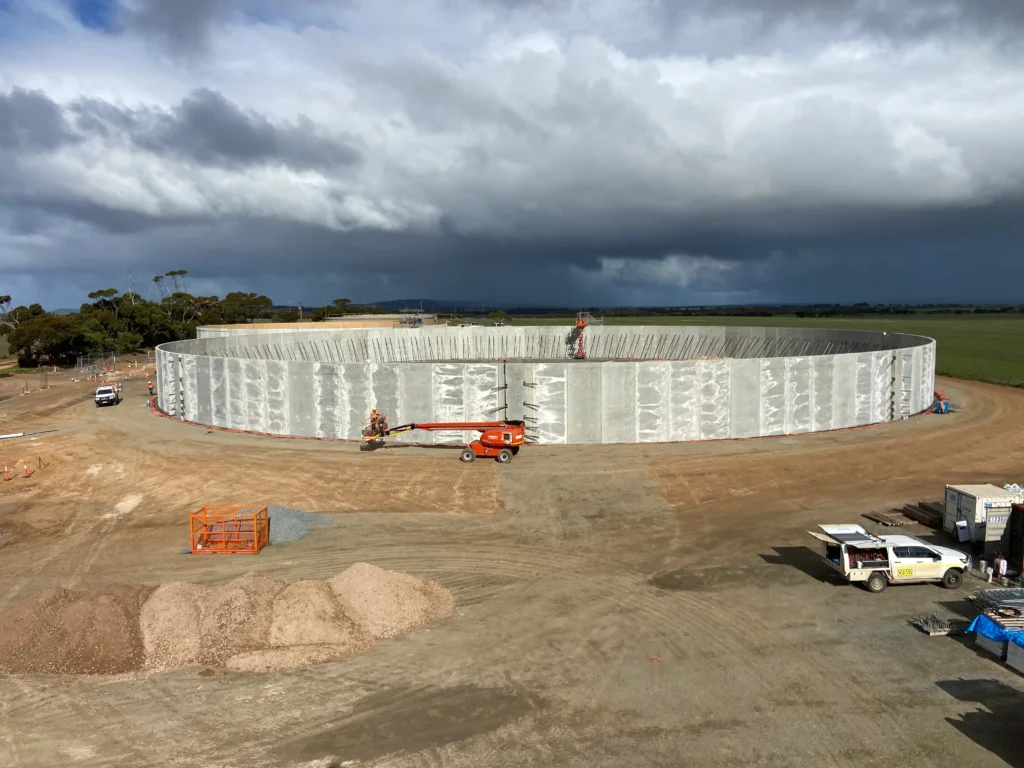
Utility-Grade Government Containment
Remote sites make everything harder, and potable water leaves no margin for error. Our customer, an Australian water utility, needed two large-scale potable water storage systems at a remote site. The usual options didn’t stack up. Traditional storage was expensive and slow to build that far from a major centre, and it left the water […]…
See more
Nov 10, 2026
Case Study
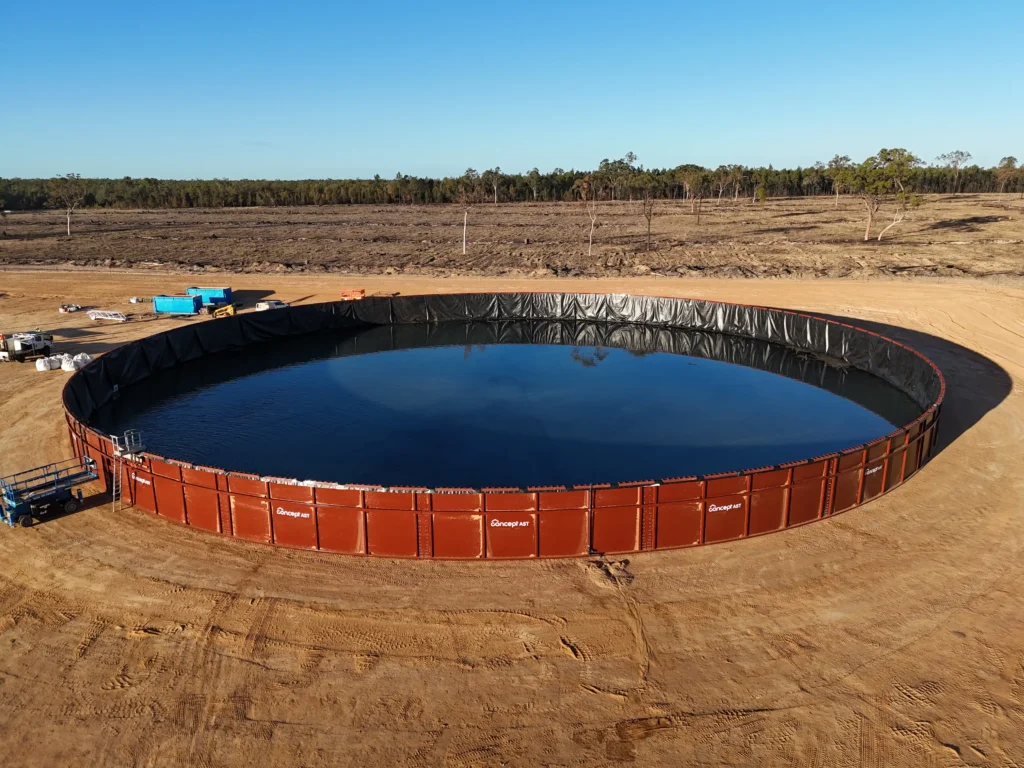
Rethinking Frac Fluid Storage In Australia
Frac water management is logistically complex. Remote sites, variable conditions, and strict project schedules mean any delay in water delivery can increase standby costs and disrupt operations. A recent project required 14.5ML of temporary storage capacity for a hydraulic fracturing program, a common requirement for operations in Queensland and the Northern Territory. The objective was […]…
See more
Nov 10, 2026
Frequently asked
questions
Common questions about the Concept Tank, Utility Tank, and Concept AST range.
What’s the difference between the Concept Tank, Utility Tank, and Concept AST?
All three are engineered fluid storage systems, sized for different needs. Concept Tank™ (1–78 ML, precast concrete) suits large-volume, regulated, or compliance-sensitive storage with a fast 1-7 week build. Utility Tank™ (up to 70 ML, precast concrete) is built for permanent, decades-long storage with up to a 100-year design life. Concept AST™ (0.6–14.5 ML, steel) is built for speed and mobility, no concrete foundations, fully relocatable, suited to short-term or evolving requirements.